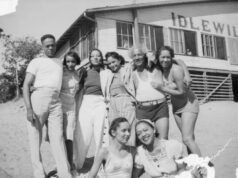

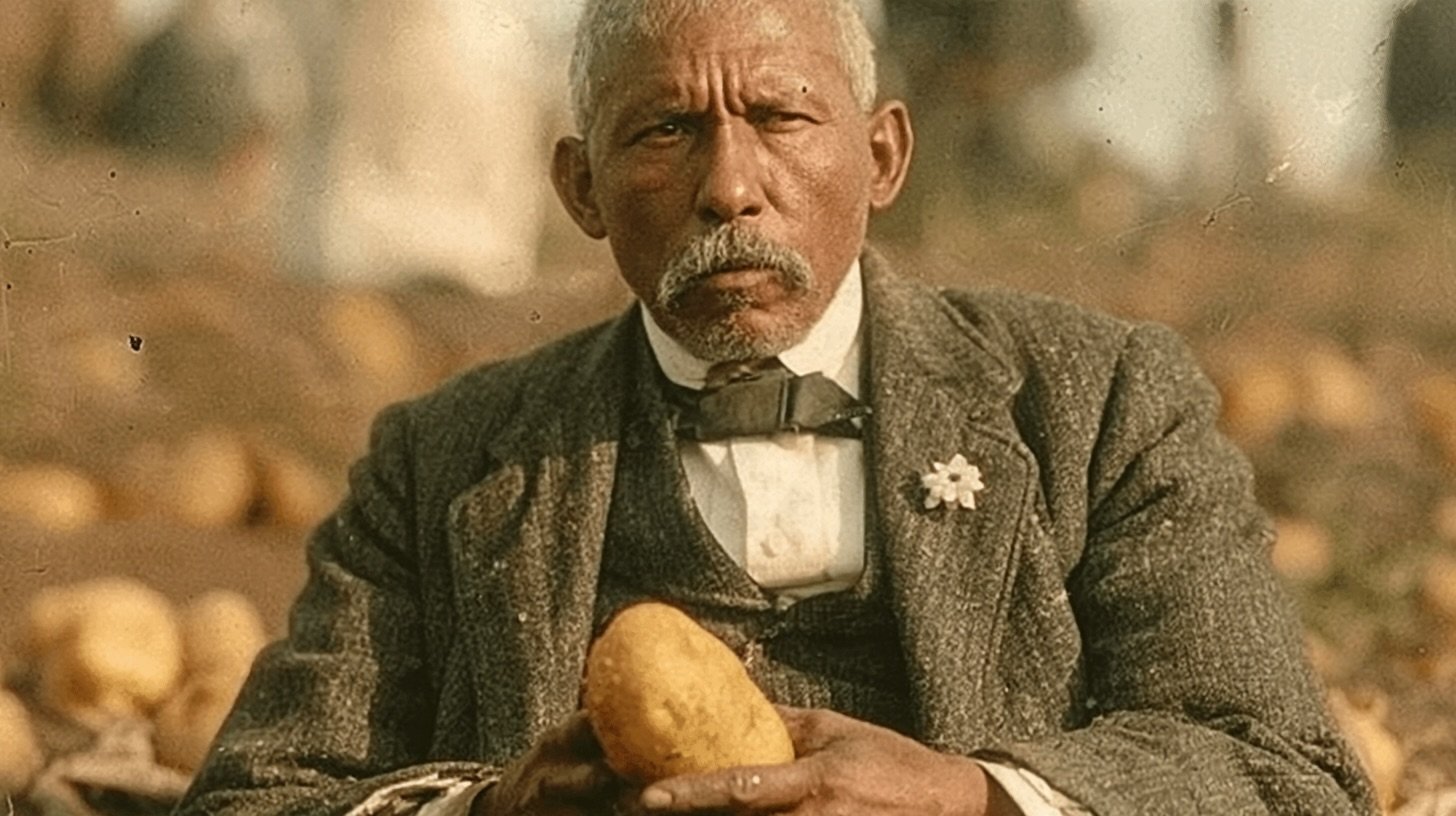
Junius George Groves was born into slavery on 12 April 1859, in Green County, Kentucky. His parents were Martin and Mary Anderson Groves. He was the third of seven children. He received only three months of schooling each year, but he taught himself to read, write, and understand mathematics.
When emancipation came, his father died. His mother remarried a former slave named Henry Cox. Groves, still a young man, decided he wanted more than the South could offer.
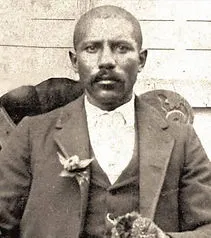
In 1879, at the age of nineteen or twenty, he joined the Exodusters. He walked roughly 500 miles from Kentucky to Kansas with ninety cents in his pocket. He settled in Edwardsville, Kansas, and took work as a farm labourer and sharecropper. The wages were, in his own words, “almost starvation wages, 40 cents per day”.
In 1880, he married Matilda E. Stewart of Kansas City, Missouri. They rented nine acres and planted potatoes. That first year, they cleared a profit of $125 from white and sweet potatoes, about $3,600 in today’s money. Four years later, they bought their first farm.
Groves discovered he had a gift for growing potatoes. He studied the science of agriculture. He sent his sons to Kansas State Agricultural College and applied what they learned to the farm. The results were extraordinary. He produced 396 bushels of potatoes per acre while his neighbours managed twenty-five. In one year, his farm harvested 72,154 bushels of white potatoes alone. His total production reached 721,500 bushels in a single year.
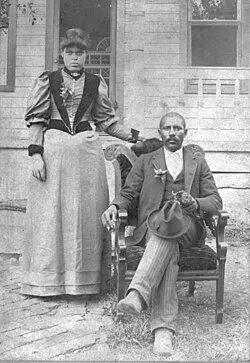
By 1902, he was called the Potato King of the World. The United States Department of Agriculture recognised his achievement: no one on earth grew more bushels of potatoes per acre.
The Union Pacific Railroad built a special spur to his property so his crops could be loaded directly onto train cars. His potatoes shipped throughout the United States, Mexico, and Canada. He expanded into seed potatoes, onions, and apples. He invented a power potato sorter that could screen and sort a railroad car’s worth of potatoes in an hour.
He built a 22-room mansion on a hill overlooking his farm. It had electricity, hot and cold running water in every bedroom, two telephones, and a ballroom on the top floor. It was called the finest farmhouse in the state and was valued at $22,000, roughly $650,000 today. A white man reportedly offered him $100,000 for it. Groves refused.
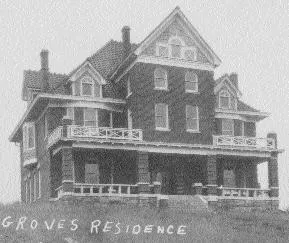
His wealth was estimated at $80,000 in 1904 and $300,000 by 1915. He owned over 500 acres in the Kaw Valley. He held stock in mines in Indian Territory and New Mexico, and stock in Kansas banks. He owned a general store in Edwardsville and majority interest in the Kansas City Casket and Embalming Company.
But Groves did not hoard his success. He used it to build community.
In 1886, he helped found the Pleasant Hill Baptist Church in Edwardsville. He was a founding member of the Kansas State Negro Business League, the Kaw Valley Potato Association, and the Sunflower State Agricultural Association. He employed up to fifty labourers, Black and white, during the growing season.
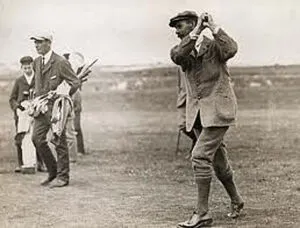
In the early 1900s, he founded Groves Center, an African American community near Edwardsville, selling small tracts of land to Black families. He built a golf course for African Americans, one of the first in the United States. He also helped convince Kansas City to integrate a park. When Kansas City’s golf courses finally opened to African Americans, Groves turned his golf course over to the community for residential lots.
Booker T. Washington featured Groves in his 1907 book The Negro in Business. Washington called him “our most successful Negro farmer”.
Groves died of a heart attack on 17 August 1925. He was 66 years old. A local newspaper reported that his funeral was the largest ever held in Edwardsville.
In 2007, his descendants, the Votaw Colony Museum, and the city of Edwardsville honoured him. He was inducted into the Bruce W. Watkins Cultural Heritage Center Hall of Fame in Kansas City, Missouri. In 2018, Tonya Bolden and Don Tate published No Small Potatoes, a children’s book about his life . In April 2024, 98th Street in Edwardsville was renamed in his honour.
His great-great niece, Nina Kimbrough-Johnson, said at the street renaming: “I still live in this area so it’s very monumental to me that I can live in an area that one of my ancestors cultivated and worked so hard to develop”.
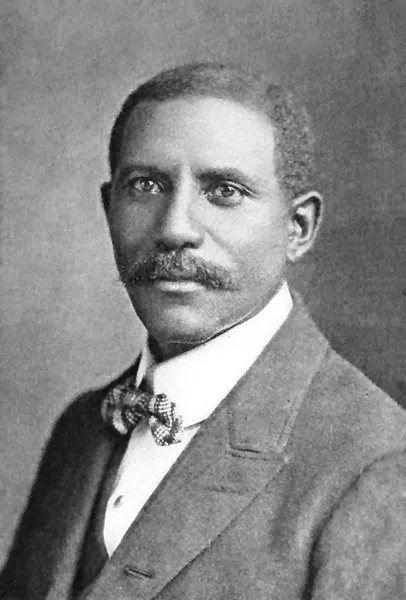
Junius G. Groves walked into Kansas with ninety cents. He left a community, a fortune, and a title no one else in the world could claim. The Potato King of the World was a formerly enslaved man from Kentucky who taught himself everything he needed to know.
Sources:
- Kansas Historical Society, “Junius G. Groves.” Kansapedia. https://www.kansashistory.gov/kansapedia/junius-g-groves/12075
- Wikipedia, “Junius George Groves.” https://en.m.wikipedia.org/wiki/Junius_George_Groves
- BlackPast.org, “Junius George Groves (1859-1925).” https://blackpast.org/african-american-history/groves-junius-george-1859-1925/
- Kansas City Star, “Move over, Idaho — the ‘Potato King of the World’ called Kansas his home,” 3 August 2017. https://www.kansascity.com/news/local/article165579212.html
- What It Means to Be American, “The Once-Enslaved Kentuckian Who Became the ‘Potato King of the World,'” 7 July 2019. https://whatitmeanstobeamerican.org/identities/the-once-enslaved-kentuckian-who-became-the-potato-king-of-the-world/
- Kansas Public Radio, “Remembering the Former Slave Who Moved to Kansas and Became the Potato King of the World,” 29 August 2023. https://kansaspublicradio.org/commentaries/2023-08-30/remembering-the-former-slave-who-moved-to-kansas-and-became-the-potato-king-of-the-world
- KCTV5, “Edwardsville street renamed to honor ‘Potato King’ of Kansas,” 19 April 2024. https://www.kctv5.com/2024/04/20/edwardsville-street-renamed-honor-potato-king-kansas/
• 8. Tonya Bolden, No Small Potatoes: Junius G. Groves and His Kingdom in Kansas (Random House Children’s Books, 2018).