
Saint Maurice was born in Egypt. He died in Switzerland. And his image became one of the most powerful symbols of Black sanctity in European history.
According to tradition, Maurice was an officer of the Theban Legion, a Roman military unit composed of Egyptian soldiers. He was born around 250 AD to a pagan family. His name, Mauritius, meant “African knight”. The legion was transferred to Gaul by Emperor Maximian to suppress a rebellion. But when the soldiers were ordered to sacrifice to pagan gods or to fight against fellow Christians, they refused. The emperor ordered decimation, one in ten killed. Then another decimation. Then the entire legion was executed. Maurice and his companions died at Agaunum, now Saint-Maurice in Switzerland, around 286 AD.
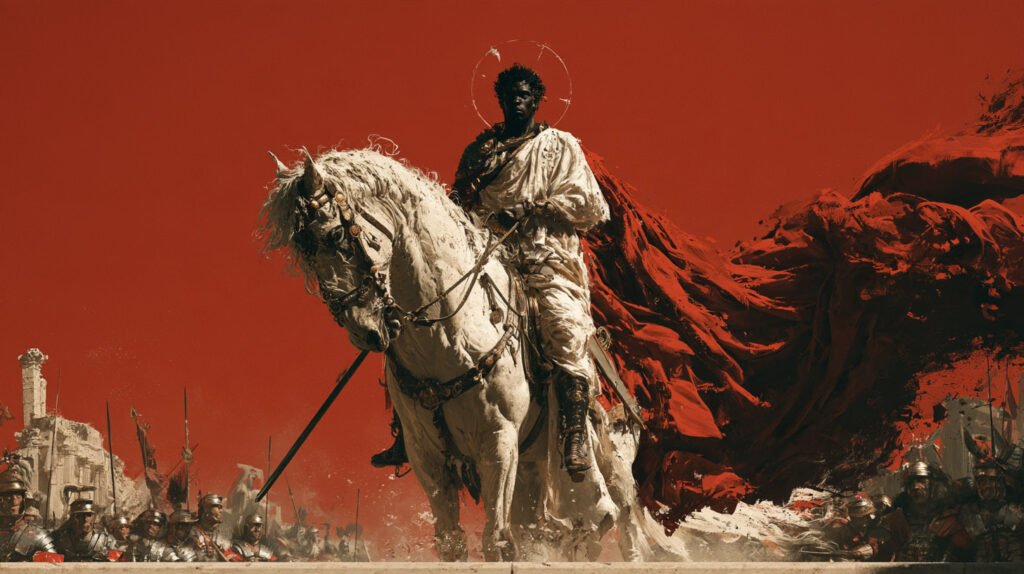
The site of their martyrdom became a place of pilgrimage. A basilica was built over their remains. And over the centuries, Maurice’s cult spread across Europe.
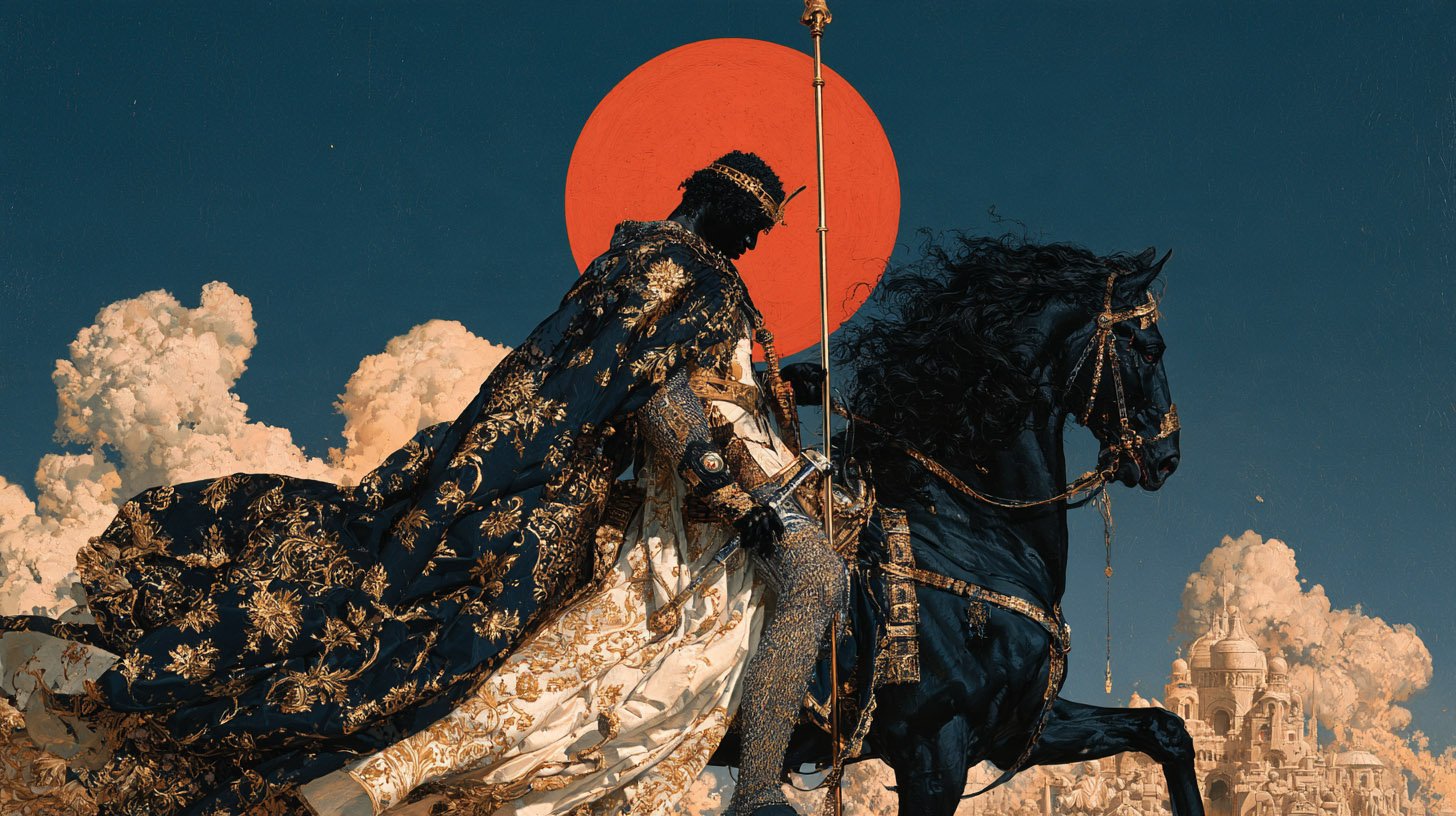
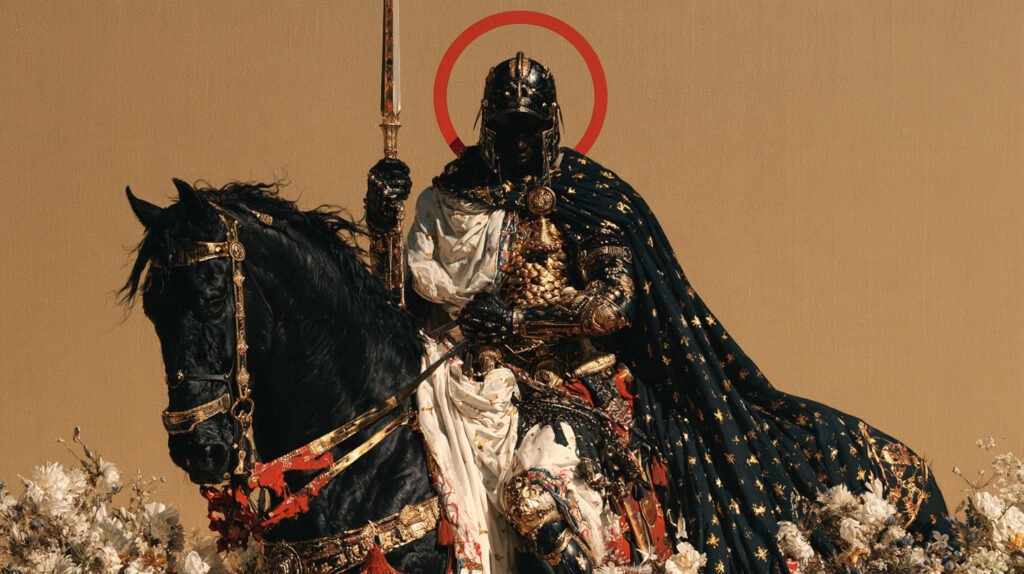
Then something remarkable happened to his image. From the 13th century onward, European artists began to depict Maurice as a Black African. The Latin word “maurus” meant dark-skinned, and in medieval usage it referred to people with dark skin. The name and the man merged. By the Renaissance, artists like Matthias Grünewald were painting Maurice as a dignified Black knight in gleaming armor. His image became a symbol of Black dignity in an era when the transatlantic slave trade was beginning to dehumanize Africans.
In Poland, Maurice’s veneration took a specific and political form. According to Polish tradition, Emperor Otto III gave Bolesław Chrobry the Holy Lance of Saint Maurice at the Congress of Gniezno in 1000 AD. The lance, which may have contained a nail from the Crucifixion, became one of the most sacred objects in the Polish royal treasury. It symbolized sovereignty and divine favor. The gift was part of Otto’s recognition of Bolesław’s authority and the establishment of an independent Polish ecclesiastical province.
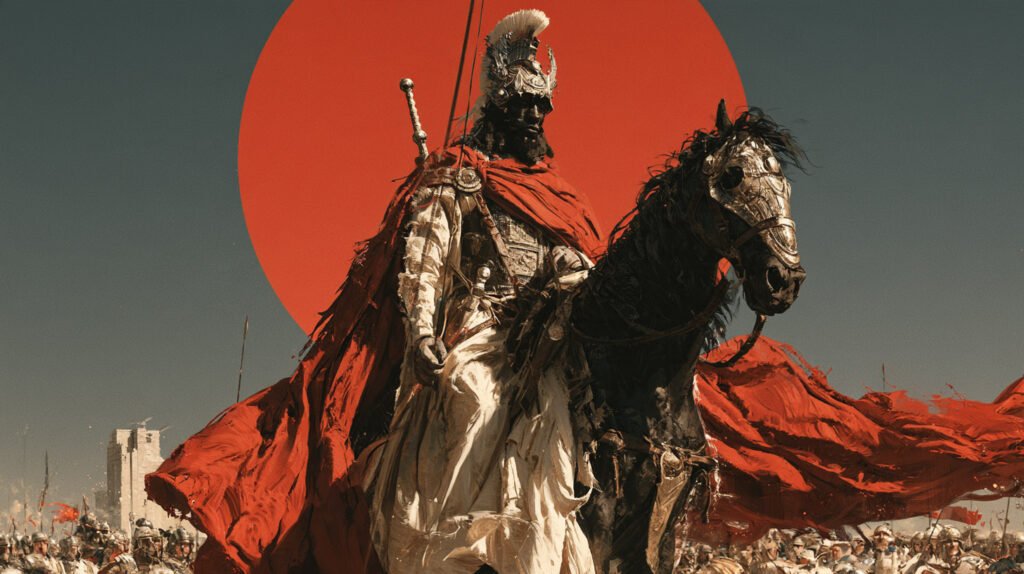
The lance is preserved today in the treasury of the Cathedral of Kraków. It is described as “the oldest relic of royalty in Poland”. Churches dedicated to Saint Maurice were built across the country. In Zawichost, a 12th-century church was built on a tetrakonchos plan. In Wrocław, a church dedicated to Maurice was first mentioned in 1234 and still stands today. In Legnica, a Baroque church and monastery were built in the early 18th century.
Maurice’s legacy extends far beyond Poland. He is the patron saint of soldiers and of the Alpini military corps, proclaimed by Pope Pius XII in 1941 . He is also a patron of the Swiss Guard. His cross appears in the flag of Switzerland. The Order of Saints Maurice and Lazarus, founded in 1434, carries his name.
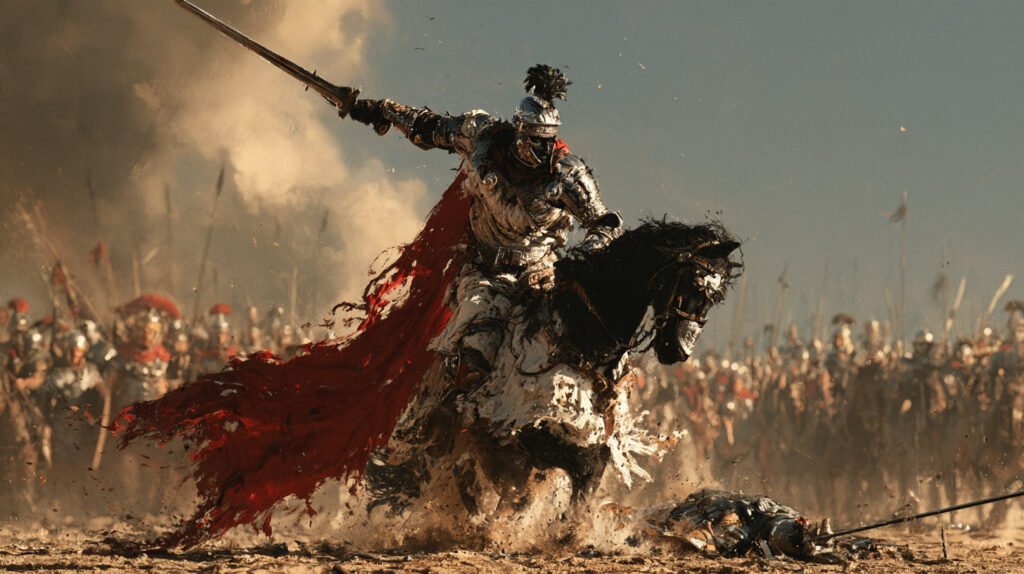
But perhaps his most significant legacy is in the history of Black representation. Saint Maurice is one of the earliest and most widely venerated African figures in European Christianity. His image, a Black man in armor, a martyr, a saint, challenged the racial hierarchies that would later be used to justify slavery and colonialism. He was venerated in Poland, Germany, Switzerland, and beyond. His lance touched the crown of Poland’s first king.
Saint Maurice was an Egyptian soldier who refused to sacrifice to pagan gods. He died with his legion. And centuries later, his image became a symbol of Black sanctity and dignity in a Europe that would soon forget the African roots of its own faith.
Sources:
- Vatican State, “September 22: Saint Maurice and Companions, Martyrs.” https://vaticanstate.va/en/component/content/article/september-22-saint-maurice-and-companions-martyrs.html
- Polskie Radio, “1050. rocznica Chrztu Polski. Historia włóczni św. Maurycego,” 3 May 2016. https://www.polskieradio.pl/10/3951/Artykul/1603276
- De Gruyter Brill, “Redeploying a Saint: The Black Maurice and the Shifting Iconography of Blackness in Post-Reformation Germany and the Baltics,” 2023. https://www.degruyterbrill.com/document/doi/10.1515/zkg-2023-3004/html
- UKSW Academic Repository, “Architektura znaczeń” (on Grünewald’s depiction of the Black Maurice). https://bazawiedzy.uksw.edu.pl
- Atlas de l’Archéologie du Nord, “Lance de St Maurice, conservée à Cracovie.” https://sbc.org.pl/Content/873/PDF/873.pdf
- Zabytek.pl, “Kościół parafialny pw. św. Maurycego, Wrocław.” https://zabytek.pl
- Szlaki Dolnego Śląska, “Legnica – kościół św. Maurycego.” https://dolnoslaskie.szlaki.pttk.pl/2578-dolnoslaskie-legnica-kosciol-sw-maurycego
- Informator Archeologiczny, “Zawichost, st. 2 (kościoły NMP i św. Maurycego),” 1999. https://bazhum.muzhp.pl
- Museo Castilla y León, “La representación de San Mauricio.” http://museoscastillayleon.jcyl.es
- HathiTrust, “Poland” (on the lance of St. Maurice at Kraków). https://babel.hathitrust.org
Verification Table
| Key Fact | Source & Context | Status |
| Maurice was an officer of the Theban Legion, a Roman military unit composed of Egyptian soldiers | Vatican State | Verifiable |
| Tradition places his birth around 250 AD to a pagan family | Vatican State | Verifiable (tradition) |
| His name, Mauritius, meant “African knight” | Vatican State | Verifiable (tradition) |
| The oldest account of the martyrdom dates to 450–455 AD, by Bishop Eucherius of Lyon | Vatican State | Verifiable |
| The legion refused to sacrifice to pagan gods or fight fellow Christians | Vatican State | Verifiable (tradition) |
| The emperor ordered decimation; the entire legion was eventually executed | Vatican State | Verifiable (tradition) |
| Martyrdom occurred c. 286 AD at Agaunum (modern Saint-Maurice, Switzerland) | Vatican State | Verifiable (tradition) |
| From the 13th century onward, European artists depicted Maurice as a Black African | De Gruyter (scholarly article) | Verifiable |
| The Latin term “maurus” meant dark-skinned; in medieval usage it referred to people with dark skin | UKSW academic source | Verifiable |
| A church dedicated to Saint Maurice was built in Zawichost, Poland, in the 12th century | Informator Archeologiczny | Verifiable |
| The Holy Lance of Saint Maurice was given to Bolesław Chrobry by Otto III at Gniezno in 1000 AD | Polskie Radio ; HathiTrust ; Atlas de l’Archéologie | Verifiable |
| The lance is preserved in the treasury of the Cathedral of Kraków | Atlas de l’Archéologie | Verifiable |
| The lance became a symbol of Polish sovereignty | Polskie Radio | Verifiable |
| A church dedicated to Saint Maurice stands in Wrocław, first mentioned in 1234 | Zabytek.pl | Verifiable |
| A church dedicated to Saint Maurice stands in Legnica | Szlaki Dolnośląskie | Verifiable |
| Maurice is patron of the Alpini military corps (proclaimed by Pius XII in 1941) | Vatican State | Verifiable |
| Maurice is patron of the Swiss Guard | Museo Castilla y León | Verifiable |
Achievements, Awards & Commemorations
| Commemoration | Date | Details |
| Feast Day | 22 September | Universal Catholic commemoration |
| Patron of the Alpini | 1941 | Proclaimed by Pope Pius XII |
| Patron of the Swiss Guard | Ongoing | One of the military corps under his protection |
| Holy Lance of Saint Maurice (Kraków) | 1000 AD | Given to Bolesław Chrobry at Gniezno; preserved in Kraków Cathedral treasury |
| Church of St. Maurice, Zawichost | 12th century | Tetrakonchos church; archaeological remains documented |
| Church of St. Maurice, Wrocław | First mentioned 1234 | One of Wrocław’s oldest churches; Gothic-Baroque structure |
| Church of St. Maurice, Legnica | 1700–1723 | Baroque church and monastery |
| Order of Saints Maurice and Lazarus | 1434 | Founded by Amadeus of Savoy |
| Grünewald’s “Saints Erasmus and Maurice” | 1520–1524 | Alte Pinakothek, Munich; one of the most famous depictions of the Black Maurice |