
In 1846, a woman was crowned queen of a kingdom the French were determined to conquer. Her name was Ndaté Yalla Mbodj. She ruled for less than a decade, but her resistance became a symbol of African sovereignty that outlasted her kingdom.
Ndaté Yalla was born around 1810 in the Kingdom of Waalo, in what is now northwestern Senegal. Her father was Brak Amar Fatim Borso Mbodj, the king. Her mother was Fatim Yamar Khuri Yaye, a Lingeer-Awo, the king’s first wife . Waalo was one of the four main Wolof kingdoms of Senegambia, strategically located at the mouth of the Senegal River, where it controlled access to French trading posts.
The kingdom had an unusual political structure. While the Brak was the nominal ruler, real power often lay with the Lingeer, the queen or royal princess. These women were not figureheads. They were trained in politics, diplomacy, and warfare. They could command armies and sign treaties.
Ndaté Yalla’s childhood was marked by tragedy and survival. When she was about ten years old, Moorish warriors attacked the capital. Her mother, Fatim Yamar, led the defence. When defeat became inevitable, rather than face capture, the women of Waalo chose death. Fatim Yamar helped her two daughters escape before taking her own life . The sisters, Ndjeumbeut and Ndaté Yalla, carried their mother’s legacy forward.
At sixteen, Ndaté Yalla married her cousin, Brak Yerim Mbanyik Tigereleh Mbodj, in a political alliance designed to strengthen the Tedyek clan’s power. Her second marriage, to Sakoura Barka Diop, known as Marosso Tassé was more consequential. He was a prince of Cayor, a lord of Koki, and a warrior. He became the commander of Ndaté Yalla’s army.
On 1 October 1846, following the death of her sister Ndjeumbeut, Ndaté Yalla was crowned Lingeer of Waalo in Nder, the capital . She ruled from 1846 to 1855.
Her reign was defined by conflict. The French at Saint-Louis wanted to control the river valley. The Moors of Trarza wanted to expand into Waalo territory. Ndaté Yalla fought both.
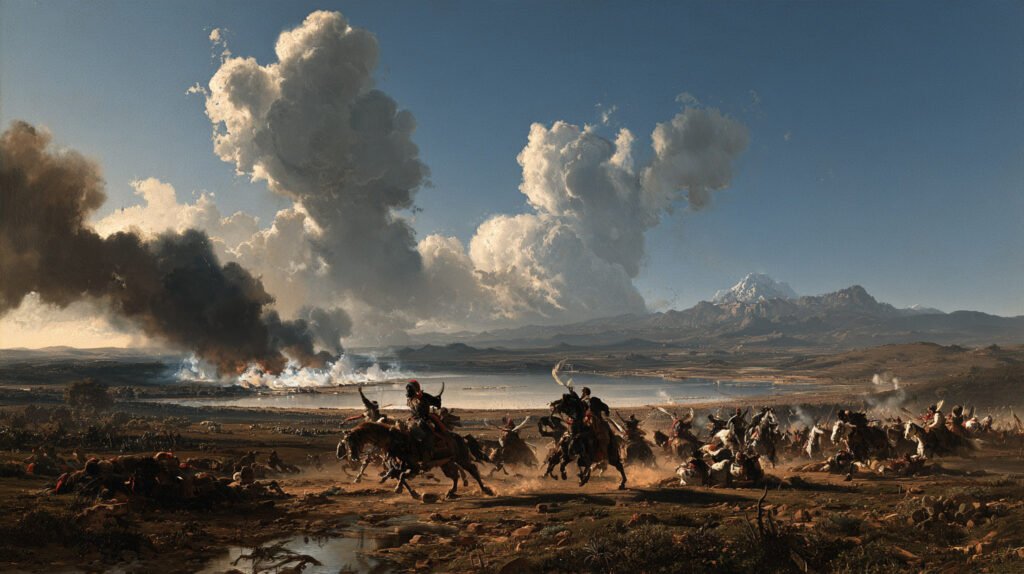
The most famous moment of her reign came in 1847. A herd of cattle belonging to Soninke merchants had been stopped, and the French claimed the queen had kept sixteen of the best animals for herself. The French governor threatened her. Ndaté Yalla responded with a letter that is still quoted today.
“We have wronged no one,” she wrote. “Walo belongs to us, that is why we guarantee the passage of livestock in our country. For this reason we charge one-tenth and we shall never accept any other thing. Saint-Louis belongs to the Governor, Cayor to the Damel, Djollof to the Bourba, Fouta to the Almamy and Walo to the Brak. Each of these chiefs governs his country the way he deems fit” .

The letter was not just a defence of her rights over cattle. It was a declaration of political equality. Ndaté Yalla was asserting that the French governor was one sovereign among many, and that Waalo was not his to command.
In 1851, she wrote again, claiming the island of Mboyo: “The purpose of this letter is to inform you that the Island of Mboyo has belonged to me from my grandfather to me. Today, there is no one who can say this country belongs to him, it belongs to me alone”.
She also prohibited European trade in her kingdom’s ports and refused to pay damages demanded by the French . The French needed a pretext for conquest. Ndaté Yalla gave them one.

In 1854, General Louis Faidherbe became governor of Senegal. He had a mandate to expand French control over the region. Waalo was the first target .
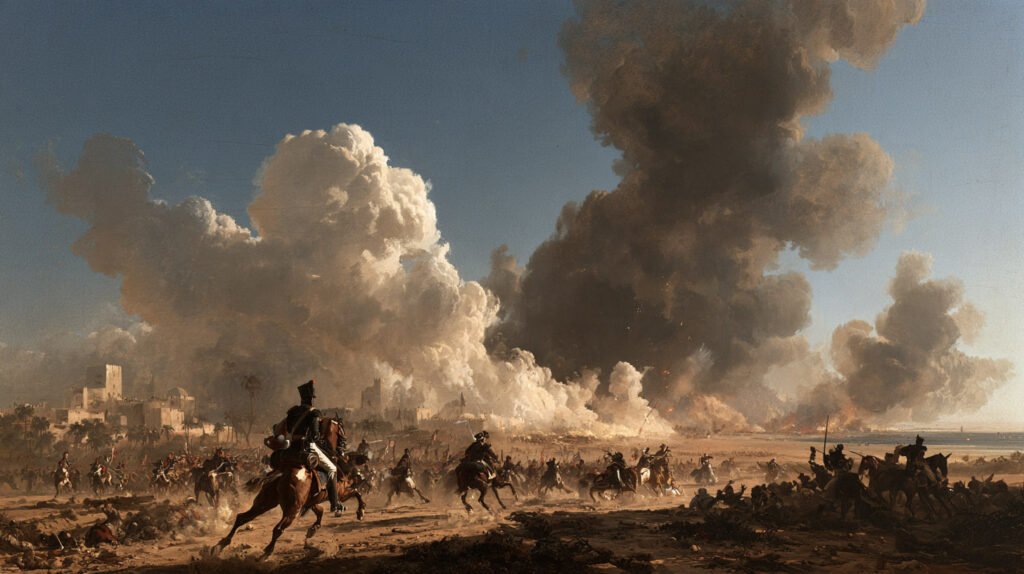
In February 1855, Faidherbe marched on Waalo. The decisive battle took place at Dioubouldy. Ndaté Yalla’s forces, commanded by Marosso Tassé, fought fiercely, but they were outgunned. The French had superior technology. The Waalo army was defeated.
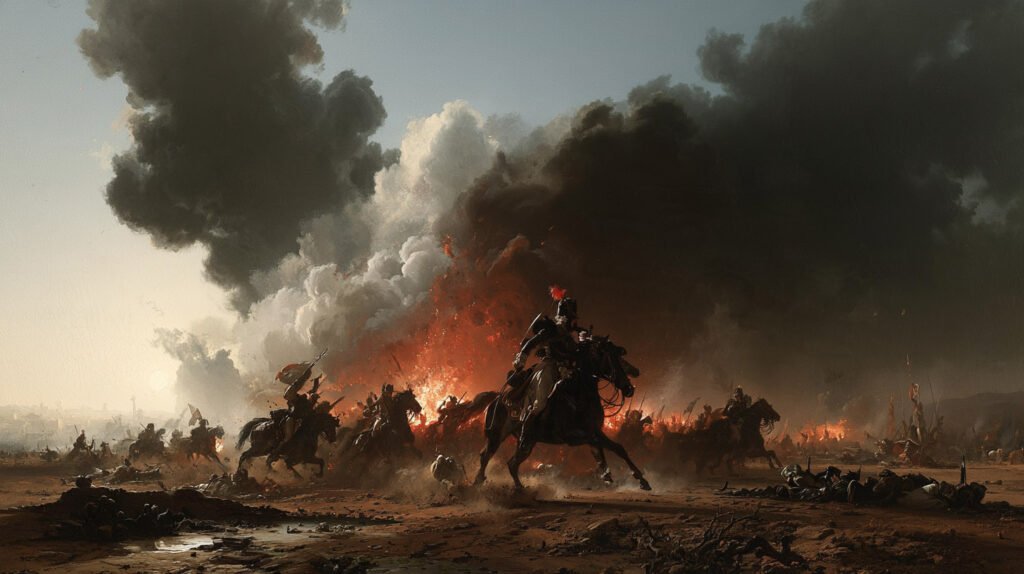
Faidherbe’s troops entered Nder and burned it. Ndaté Yalla’s son, Sidya, was captured. He was taken to Saint-Louis, baptized as a Christian, given the name Léon, and sent to school in Algeria.
Ndaté Yalla fled to Cayor, where she was given refuge by the royal family. She never returned to power. She died in exile in 1860 (some sources say December 1856) .
But her story did not end there.
Her son, Sidya Diop, returned to Senegal and continued his mother’s fight. In 1869, he led a general insurrection against the French. He was betrayed in 1875, deported to Gabon, and died there in 1878.
Ndaté Yalla is remembered today as one of the most important women in Senegalese history. A statue stands in her honour in Dagana, based on a photograph taken by Abbé David Boilat in 1850. The Place Ndaté Yalla hosts Senegal’s official independence day ceremonies, a symbolic choice that links the nation’s sovereignty to her resistance.
Ndaté Yalla Mbodj was the last queen of Waalo. Her kingdom fell. But her letter, her resistance, and her legacy outlived the empire that defeated her.
Sources:
- Archives du Sénégal, “Journée Internationale des Droits de la Femme : Hommage à trois figures historiques sénégalaises.”
- Wikipedia, “Ndaté Yalla Mbodj.”
- APS (Agence de Presse Sénégalaise), “Dagana : la place Ndaté Yalla, symbole de résistance et d’histoire,” 2 April 2026.
- SenePlus, “NDATTE YALLA MBODJ, CHEFFE DE GUERRE ET SYMBOLE DE LA RÉSISTANCE COLONIALE,” 19 September 2023.
- Kassataya, “[PROFIL] – Ndatte Yalla Mbodj : Cheffe de guerre et symbole de la résistance coloniale,” 19 September 2023.
- Wikipédia (French), “Ndaté Yalla.”
Verification Table
| Key Fact | Source & Context | Status |
| Ndaté Yalla Mbodj was born around 1810 | Archives du Sénégal; Wikipedia | Verifiable |
| She was born in the Kingdom of Waalo, in present-day Senegal | Archives du Sénégal | Verifiable |
| Her father was Brak (King) Amar Fatim Borso Mbodj | Wikipedia | Verifiable |
| Her mother was Lingeer-Awo Fatim Yamar Khuri Yaye Mbodj | Wikipedia | Verifiable |
| She was the youngest daughter | Wikipedia | Verifiable |
| Her mother died in the Nder resistance, helping her daughters escape | Wikipedia | Verifiable |
| She married her cousin Brak Yerim Mbanyik at age 16 | Wikipedia | Verifiable |
| She later married Sakoura Barka Diop (Marosso Tassé Diop), Prince of Cayor and Lord of Koki | Wikipedia | Verifiable |
| Marosso Tassé commanded her army | Wikipedia | Verifiable |
| She was crowned Lingeer (Queen) of Waalo on 1 October 1846 in Nder | Wikipedia; SenePlus | Verifiable |
| She succeeded her sister Ndjeumbeut Mbodj | Wikipedia; SenePlus | Verifiable |
| She reigned from 1846 to 1855 | Wikipedia | Verifiable |
| In 1847, she opposed French authorities over cattle passage for the Soninke | Wikipedia | Verifiable |
| On 18 June 1847, she wrote a letter to the French governor asserting Waalo’s sovereignty | Wikipedia | Verifiable |
| The letter states: “We have wronged no one. Walo belongs to us… Each of these chiefs governs his country the way he deems fit” | Wikipedia | Verifiable |
| She also fought the Moors of Trarza | Wikipedia | Verifiable |
| General Louis Faidherbe became governor of Senegal in 1854 | SenePlus | Verifiable |
| Faidherbe invaded Waalo in February 1855 | SenePlus | Verifiable |
| She was defeated on 31 January 1855 (some sources say 25 February) | Wikipedia; SenePlus | Debated (date discrepancy) |
| Her capital, Nder, was burned by the French | SenePlus | Verifiable |
| Her son Sidya Diop was captured | Wikipedia | Verifiable |
| She fled to Cayor | Archives du Sénégal | Verifiable |
| She died in December 1856 according to Archives du Sénégal | Archives du Sénégal | Debated |
| She died in 1860 according to Wikipedia and other sources | Wikipedia | Debated |
| She died in Dagana (some sources say Cayor) | Wikipedia; Mapcarta | Debated |
| A statue of her stands in Dagana | APS; SenePlus | Verifiable |
| A square named Place Ndaté Yalla in Dagana hosts independence ceremonies | APS | Verifiable |
Achievements, Awards & Commemorations
| Commemoration | Date | Details |
| Statue in Dagana | Present | Bronze statue erected in her honour, based on a photograph taken by Abbé David Boilat on 2 September 1850 |
| Place Ndaté Yalla, Dagana | Present | Public square named in her honour; hosts official independence day ceremonies |
| Recognition as Symbol of Resistance | Ongoing | Recognised by historians and the Senegalese state as one of the first figures of armed resistance to French expansion |