
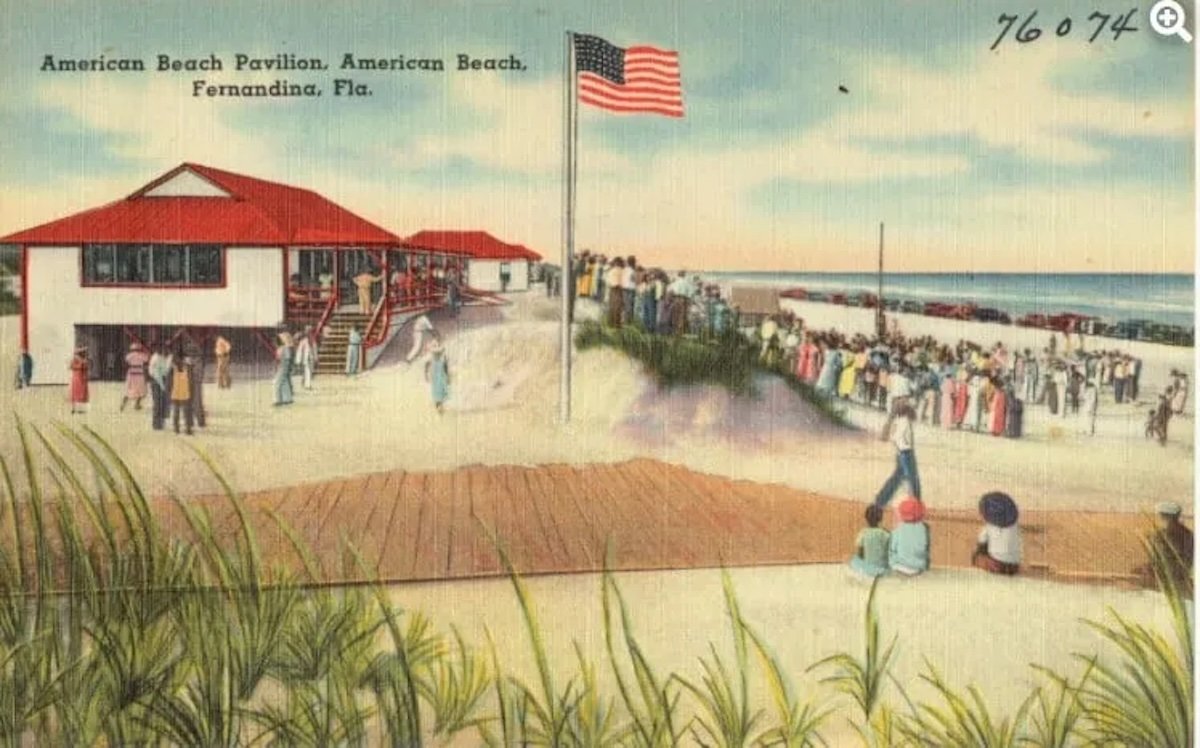
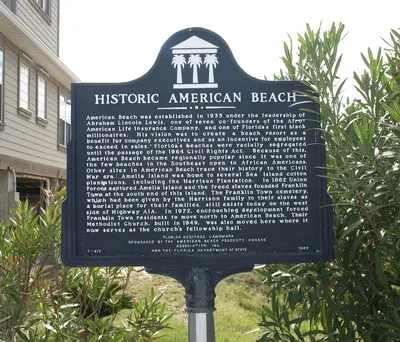
In January 1935, the Afro-American Life Insurance Company purchased thirty-three acres of land on Amelia Island, Florida, with a thousand feet of shoreline. The company’s president, Abraham Lincoln Lewis, had a vision. He wanted a beach where Black families could vacation without humiliation. At the time, Florida’s beaches were largely closed to African Americans. American Beach was the answer.
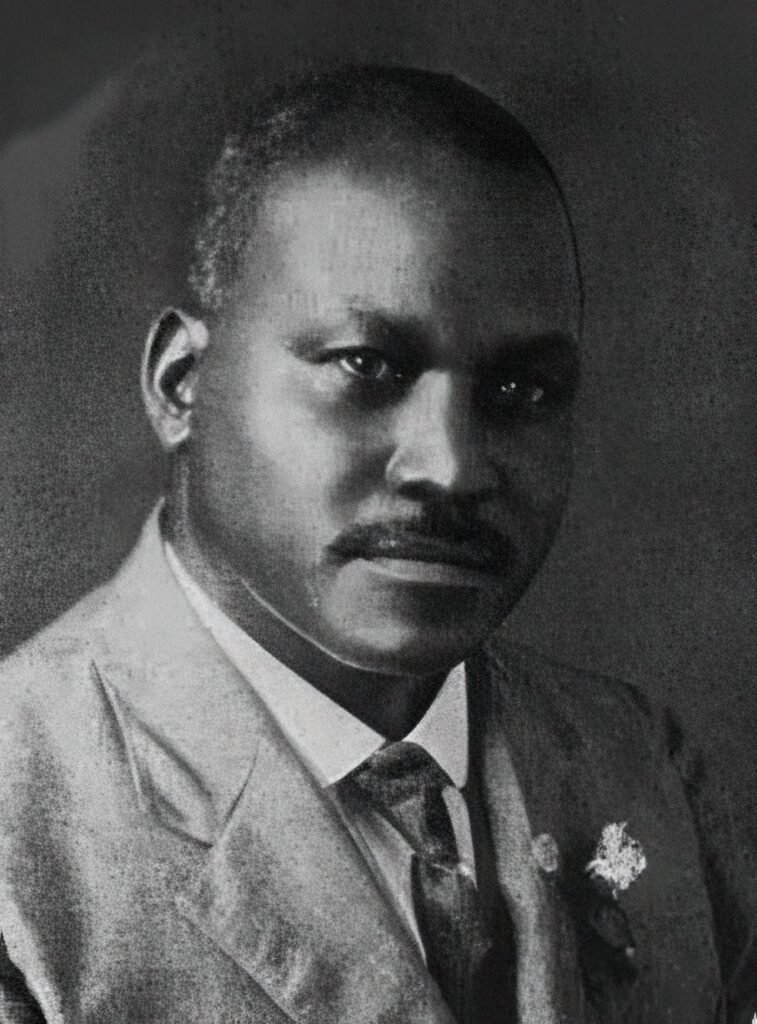
Lewis was born in 1865, the son of a freed slave. He worked his way from water boy at a lumber mill to foreman, then co-founded the Afro-American Industrial and Benefit Association in 1901 at Bethel Baptist Institutional Church in Jacksonville. The company grew rapidly, expanding across Florida. By 1937, with assets exceeding one million dollars, it was renamed the Afro-American Life Insurance Company. Lewis was Florida’s first African American millionaire.
The land at American Beach was purchased in three parcels over eleven years. The first thirty-three acres in 1935. Another hundred acres in 1936. A final eighty-three acres with 1,500 feet of shoreline in 1946. The lots were small, fifty by one hundred feet, to keep them affordable. Streets were named for Lewis, his mother Julia, and Reverend E.J. Gregg.
By 1940, twenty-five lots had been sold, mostly to professionals from Jacksonville and Fernandina Beach. The first homes were modest vacation cottages. But the community grew. In 1945, the Ocean Vu-Inn opened with a restaurant, ballroom, and twenty-one guest rooms. Mary McLeod Bethune was a frequent visitor, and her experiences at American Beach may have inspired her to establish a similar resort in Volusia County.
The 1940s and 1950s were the golden years. The “Crossroads” at Lewis and Gregg Streets became the social center. Evans’ Rendezvous had an open porch facing the ocean and a two-hundred-seat dining room. El Patio was a large nightclub. There was Reynold’s Sandwich Shop, the Sweet Tooth, and Williams’ Guest House. Presidents of historically Black colleges and universities stayed at Williams’ Guest Lodge.
The guest list was extraordinary. Zora Neale Hurston visited in the summer of 1939. She was married to Albert W. Price III, grandson of one of the Afro-American Life founders. Cab Calloway, Ray Charles, and James Brown performed at the clubs. Joe Louis and Hank Aaron walked the sand. Ossie Davis visited. Barbara Montgomery had a vacation home. Federal judges and Florida Supreme Court justices owned houses.
James Brown was famously turned away from Evans’ Rendezvous once. He came back anyway. The story became part of the community’s lore.
The decline came in 1964. The Civil Rights Act desegregated beaches everywhere, and Black vacationers began going elsewhere. Hurricane Dora devastated the area that same year, destroying homes and businesses. The Ocean Vu-Inn, Williams’ Guest Lodge, and other landmarks were lost or closed. The Afro-American Life Insurance Company’s fortunes declined. The Lewis family sold its holdings, the last hundred-acre parcel going in the 1980s.
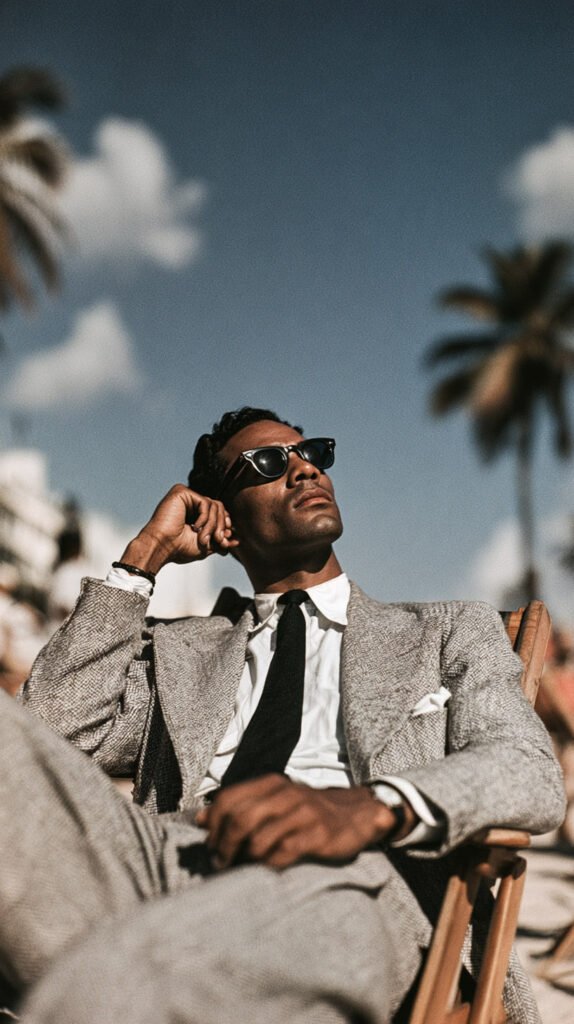
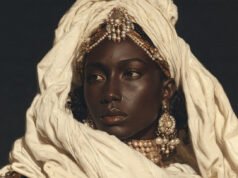
Generated by A.I
The remaining 125 acres were surrounded by resort development. Property values rose. Middle-class owners struggled to stay. But the community did not vanish. Property owners formed American Beach, Inc. to fight for the community’s heritage.
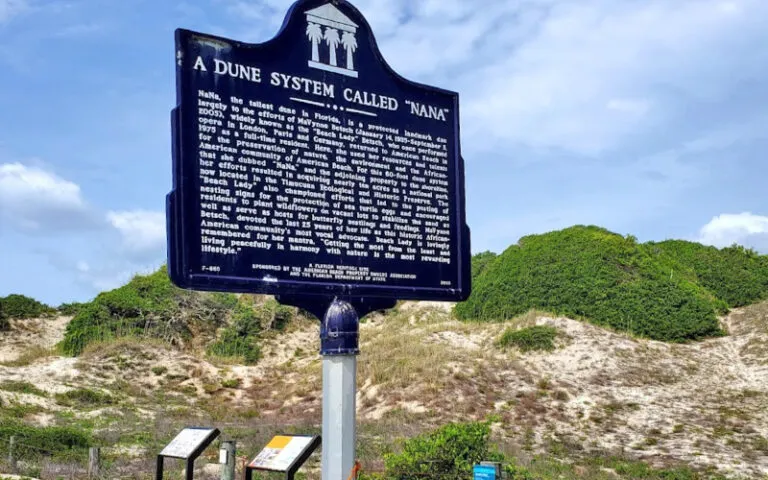
The fight was led by MaVynee Betsch, A.L. Lewis’s great-granddaughter, known as “The Beach Lady.” She lived in her great-grandfather’s house in the 1970s and spent the final decades of her life campaigning to protect American Beach. She succeeded in securing the protection of NaNa, a sixty-foot sand dune that is the tallest in Florida, and in getting the Historic District listed on the National Register of Historic Places in 2002. She died in 2005.
In 2024, the National Park Service launched a study to consider American Beach for National Historic Landmark designation. The draft nomination argues that American Beach is nationally significant as a rare example of a segregated planned ocean beach resort established by Black professionals. The public comment period on the draft ran through September 2025.
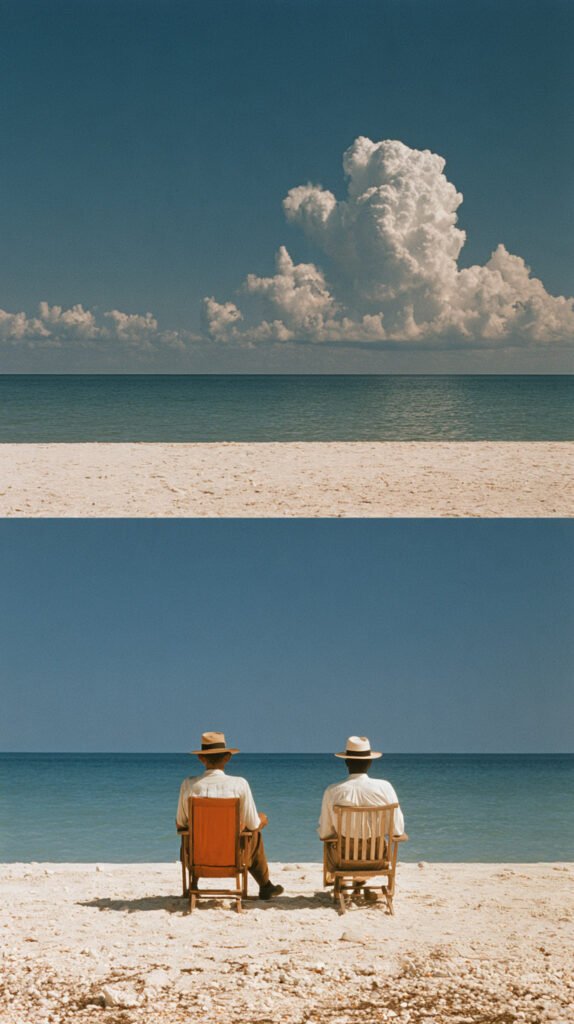
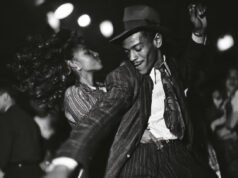
Generated by A.I
American Beach was never just a beach. It was a statement. A Black insurance company bought oceanfront property when Black people were excluded from the shore. They built a community where Black excellence was normal. They hosted legends. They made a place of hope in an era of despair.
The sand dune NaNa still stands. The Historic District still exists. And the National Park Service is now considering whether American Beach deserves the highest historic recognition in the country. A.L. Lewis built a refuge. His great-granddaughter fought to save it. And the story is still being told.
Sources:
- Florida Historical Markers Programs, “First Home on American Beach.” http://apps.flheritage.com/markers/markerDetail.cfm?id=516
- National Park Service, “American Beach Historic District” (NPS document). https://npgallery.nps.gov/GetAsset/a439a4b1-4f79-42bd-a85e-0e39cd3bfec4
- Nassau County, “Establishment of American Beach, 1935-1946.” https://nassaucountyfl.primegov.com/api/compilemeetingattachmenthistory/historyattachment/?historyId=da0dcb47-81b4-4134-a241-b9feb012bd64
- National Park Service, “National Park Service announces study of American Beach for possible National Historic Landmark designation,” 2024. http://home.nps.gov/timu/learn/news/national-park-service-announces-study-of-american-beach-for-possible-national-historic-landmark-designation.htm
- National Park Service, “American Beach National Historic Landmark Study,” July 2025. https://www.nps.gov/timu/learn/news/american-beach-national-historic-landmark-study.htm
- Georgia Historic Newspapers, “Museum tells of fight to preserve a beach’s ethnic and ecological heritage.” https://gahistoricnewspapers.galileo.usg.edu/data/batches/batch_gua_cnd2018_ver04/data/cnd2018_2018-10-25_1/0020.pdf
- Thrillist, “Wading Through History At American Beach, Florida’s First Black Beach Resort,” 27 September 2020. https://www.thrillist.com/travel/nation/american-beach-florida-history
- Wayback Machine (Wikipedia), “American Beach.” https://web.archive.org/all/20060913000000/http://en.wikipedia.org:80/wiki/American_Beach
- National Park Service, “ParkPlanning – American Beach National Historic Landmark Study.” https://parkplanning.nps.gov/projectHome.cfm?projectId=126131
- National Park Service, NPS document on American Beach (Franklintown and founding). https://npgallery.nps.gov/GetAsset/bd23b68d-080a-464b-bda5-033172966865
Verification Table
| Key Fact | Source & Context | Status |
| American Beach is located on Amelia Island, Nassau County, Florida | NPS; Florida Historical Markers | Verifiable |
| Founded in January 1935 when the Afro-American Life Insurance Company purchased 33 acres with 1,000 feet of shoreline | Florida Historical Markers | Verifiable |
| A.L. Lewis was president of the Afro-American Life Insurance Company | NPS; Florida Historical Markers | Verifiable |
| A.L. Lewis was Florida’s first African American millionaire | Florida Historical Markers | Verifiable |
| The Pension Bureau of the company purchased land over an eleven-year period, totaling 216 acres | Nassau County document | Verifiable |
| The first parcel was 33 acres and 1,000 feet of shoreline (January 1935) | Nassau County document | Verifiable |
| A second parcel of 100 acres was purchased in 1936 | Nassau County document | Verifiable |
| A final parcel of 83 acres and 1,500 feet of shoreline was acquired in 1946 | Nassau County document | Verifiable |
| At its peak, American Beach spanned 216 acres and half a mile of oceanfront | NPS document | Verifiable |
| At the time of its development, it was the only public beach in the Jacksonville area open to African Americans | Nassau County document | Verifiable |
| Zora Neale Hurston visited in summer 1939 | NPS document | Verifiable |
| Cab Calloway, Ray Charles, and James Brown performed at American Beach | NPS document | Verifiable |
| Joe Louis and Hank Aaron visited | NPS document | Verifiable |
| Mary McLeod Bethune was a frequent visitor at the Ocean Vu-Inn | NPS document | Verifiable |
| James Brown was turned away from Evans’ Rendezvous | Thrillist ; Wayback Wikipedia | Verifiable (attributed) |
| The Civil Rights Act of 1964 desegregated beaches and contributed to decline | Florida Historical Markers ; NPS document | Verifiable |
| Hurricane Dora devastated the area in 1964 | Florida Historical Markers ; NPS document | Verifiable |
| American Beach Historic District was listed on National Register of Historic Places in 2002 | NPS ; NPS | Verifiable |
| Named as the first site of the Florida Black Heritage Trail | NPS ; NPS | Verifiable |
| NPS launched study for National Historic Landmark designation in 2024 | NPS ; NPS | Verifiable |
| Draft nomination argues American Beach appears to meet NHL criteria | NPS | Verifiable |
| Public comment period on draft nomination ran July 24 – September 7, 2025 | NPS | Verifiable |
Achievements, Awards & Commemorations
| Commemoration | Date | Details |
| National Register of Historic Places | 2002 | American Beach Historic District listed |
| Florida Black Heritage Trail | Undated | Named as the first site on the trail |
| NaNa Dune Protection | 2003 | NPS assumed administrative control of the 60-foot sand dune |
| American Beach Museum | 2010s | Museum opened telling the community’s story |
| National Historic Landmark Study | 2024–present | NPS commissioned study for NHL nomination; draft under public review |